
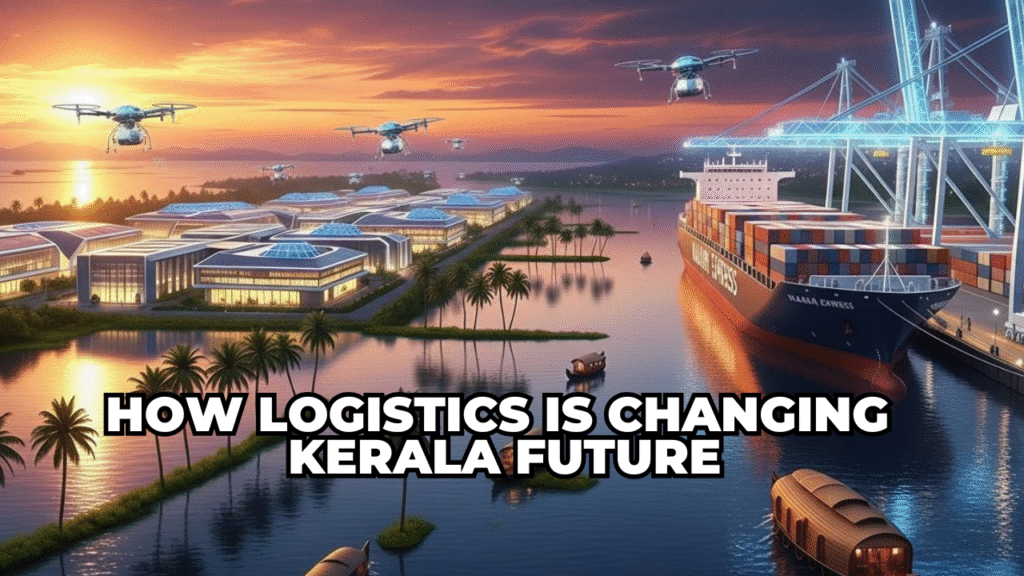
Kerala is entering a new era of economic transformation. Traditionally known for tourism, remittances, and agriculture, the state is now rapidly developing its logistics infrastructure — from deep-water ports to nationwide highway connectivity. With the rise of logistics in Kerala, this shift is creating a strong foundation for the state’s future growth in jobs, industry, and trade.
Why logistics matters for Kerala’s development
Kerala has a strategic location near major international shipping routes. To fully benefit, the state is focusing on:
• Ports & trade expansion
• Industrial logistics parks
• Stronger transportation networks
• Technology-enabled supply chains
These advances help goods move faster, cheaper, and more reliably, improving the competitiveness of businesses operating in Kerala.
Vizhinjam Port – The Game Changer
One of the biggest reasons logistics is changing Kerala’s future is the Vizhinjam International Seaport.
How Vizhinjam will impact Kerala:
• Attract global shipping companies (transshipment hub)
• Reduce dependency on foreign ports (like Colombo)
• Faster export and import clearance
• Increase foreign investment in Kerala
• Create new jobs: port handling, shipping, warehousing, customs, logistics tech
This port places Kerala directly on the global trade map.
Better Road, Rail & Multimodal Connectivity
Kerala’s logistics future relies on connecting ports to inland districts:
• Upgraded National Highways
• Dedicated freight corridors
• Last-mile connectivity to industrial zones
• Railway cargo improvements
• Coastal shipping & inland water transport
This reduces transportation time between factories → ports → markets, boosting productivity.
Rise of Logistics Parks & Industrial Clusters
Kerala is developing modern logistics parks in key locations such as Kochi and Thiruvananthapuram.
Benefits for Kerala’s economy:
• Centralized warehousing & distribution
• Support for SMEs and local manufacturing
• Cold chain facilities for agriculture & seafood exports
• Attracts new industries to set up production units
This shifts Kerala from a consumer economy to a producer economy.
E-commerce & Digital Logistics Growth
The rise of e-commerce in Kerala has accelerated logistics innovation:
• Same-day / next-day delivery
• Automated warehouse management
• Digital tracking for trucks and cargo
• More delivery & last-mile jobs
Technology adoption is transforming supply chain efficiency.
Job Creation & Skill Development
With logistics growth, Kerala’s employment opportunities expand in:
• Warehousing & distribution
• Transportation & fleet management
• Customs operations
• Port & shipping services
• Logistics IT & automation roles
Skill-training programs help Kerala’s youth join modern supply chain careers.
Logistics is not just about moving goods. For Kerala, it’s about unlocking a new growth axis — connecting remote regions to global markets, creating jobs, reducing costs, and transforming the state’s economic structure. If executed well, improved logistics can be the backbone of Kerala’s next phase of growth: more industry, more trade, more inclusion.
However, the transformation isn’t automatic. It requires continued investment, policy momentum, skills development, and mindful infrastructure planning — especially considering the state’s geography and ecological priorities.